
10 Historical Places in Tanzania: Locations and Planning Tips
Posted on 1/19/2025 by Tanzania eVisa Immigration Assistance Service
Updated on 8/10/2026
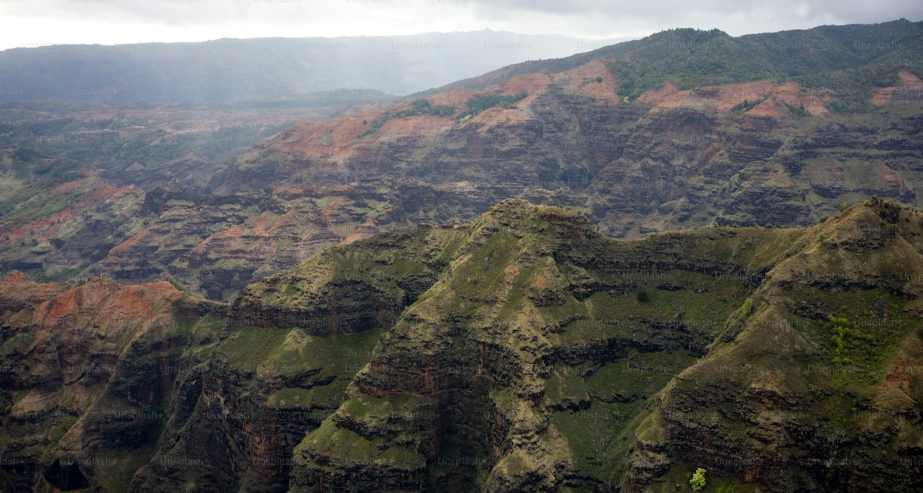
Tanzania's historical places range from Swahili trading cities and colonial-era towns to rock-art shelters and major archaeological landscapes. Choose them by route: Stone Town fits a Zanzibar stay, Olduvai Gorge can fit the northern safari circuit, while Kilwa, Mikindani and Kondoa require dedicated transport.
The UNESCO list for Tanzania confirms three cultural World Heritage properties: Stone Town of Zanzibar, the Ruins of Kilwa Kisiwani and Songo Mnara, and the Kondoa Rock-Art Sites. Ngorongoro Conservation Area is a mixed natural and cultural property.
Historical sites at a glance
| Place | Region | Why visit | Route note |
|---|---|---|---|
| Stone Town | Zanzibar | Living Swahili urban heritage | Explore on foot from Stone Town accommodation |
| Kilwa Kisiwani and Songo Mnara | Lindi | Ruins of major Swahili trading cities | Boat and guide arrangements are essential |
| Olduvai Gorge | Ngorongoro Conservation Area | Archaeology and human-origins research | Add to a northern route only if time and access allow |
| Bagamoyo | Coast Region | Port, mission, trade and colonial history | Day trip or overnight from Dar es Salaam |
| Kondoa Rock-Art Sites | Dodoma Region | Rock paintings and living cultural connections | Guided hikes and a dedicated road journey |
| Kaole Ruins | Coast Region | Coastal mosque and tomb remains | Commonly combined with Bagamoyo |
| Lushoto historic center | Tanga Region | German colonial-era highland townscape | Combine with an Usambara stay |
| Mikindani | Mtwara Region | Southern port and Swahili/colonial architecture | Plan an overnight near Mtwara |
| Amboni Caves | Tanga Region | Cave landscape and local histories | Guided excursion from Tanga |
| Mbozi Meteorite | Songwe Region | Natural-history site | Road excursion from the Mbeya area |
Site access, restoration work and opening hours change. Confirm the current status before making a long detour.
1. Stone Town, Zanzibar
Stone Town is a living urban area whose streets, houses, religious buildings and public spaces reflect centuries of Indian Ocean exchange. UNESCO describes its architecture and urban structure as evidence of cultural fusion and trade between Africa and Asia.
Rather than rush through a checklist, use a knowledgeable guide to understand building forms, the waterfront, former trade sites and the history of slavery and abolition. The Old Fort, Anglican Cathedral/former slave-market area, palace collections and Forodhani waterfront may form part of a walk.
The House of Wonders has undergone major conservation work, so do not assume interior access. Confirm the current status of every museum or historic building. See the UNESCO Stone Town profile for heritage context.
2. Kilwa Kisiwani and Songo Mnara
These island ruins document Swahili cities that prospered through Indian Ocean trade. Mosques, palaces, houses, tombs and other structures help explain the scale and organization of the settlements.
Access normally requires local boat and guide arrangements from the Kilwa Masoko area. Weather, tides, conservation rules and site conditions can affect the visit. Do not climb structures or remove coral stone or artifacts.
Allow at least an overnight in the area rather than assuming this is a simple day trip from Dar es Salaam. UNESCO's Kilwa conservation overview explains the cities' importance and past safeguarding work.
3. Olduvai Gorge
Olduvai Gorge lies within the Ngorongoro Conservation Area and is important to archaeological and paleoanthropological research. Museum interpretation and guided viewpoints help place fossil and stone-tool discoveries in context.
It can be added to some Ngorongoro–Serengeti routes, but the stop, road and applicable conservation-area arrangements should be built into the itinerary. A quick roadside mention does not replace a proper museum visit.
Use “human-origins research site” rather than treating the marketing phrase “Cradle of Mankind” as a precise scientific title.
4. Bagamoyo
Bagamoyo's heritage reflects Indian Ocean trade, caravan routes, Christian missions and German colonial administration. The town also carries difficult histories connected with enslavement and the ivory trade.
A guided visit can connect the old town, waterfront, mission collections and surviving administrative buildings. Individual structures may have limited access or restoration needs. Verify any festival date separately; an old article saying “visit in September” is not a current event confirmation.
5. Kondoa Rock-Art Sites
Kondoa's painted shelters preserve evidence of hunter-gatherer and agro-pastoral communities over a long period. UNESCO also notes that some sites retain living ritual relationships for local communities; they are not merely outdoor galleries.
Visit with an authorized local guide, stay on established approaches and do not touch, wet or trace the paintings. The terrain and heat can make hikes demanding, so confirm distance, water and footwear needs. The UNESCO inscription decision provides a careful explanation of the site's cultural significance.
6. Kaole Ruins
Near Bagamoyo, Kaole contains coral-stone mosque and tomb remains associated with early coastal settlement. A local guide can explain what is documented, what is tradition and what remains uncertain.
Combine Kaole with Bagamoyo only after checking opening hours and transport. Respect active religious and burial associations; the site is not simply a backdrop for photographs.
7. Lushoto historic center
Lushoto, formerly known as Wilhelmstal during German rule, contains surviving colonial-era buildings within the Usambara highlands. The value of a visit lies in understanding the town's layered history alongside the wider mountain landscape—not in treating one “German Boma” as the only sight.
Ask a local heritage or walking guide which buildings are publicly accessible. Do not assume an administrative building is open because it appears in an old travel photograph.
8. Mikindani
Mikindani developed as a southern coastal port and preserves Swahili, Arab, Indian and colonial-era elements. Its waterfront, street pattern and surviving buildings reward a guided walk.
Use Mtwara as the transport reference point and confirm local accommodation and guide availability. Claims about a specific “slave-trade site” should be explained with evidence rather than repeated from a tour script without context.
9. Amboni Caves
The Amboni cave system near Tanga combines geology with local stories and cultural associations. Visit only through the current authorized access arrangement and follow the guide: surfaces can be uneven, wet and dark.
Bring secure footwear and a light if the operator recommends it. Avoid repeating “largest cave in East Africa” unless the site authority provides a defined and current basis for that comparison.
10. Mbozi Meteorite
The Mbozi meteorite site in Songwe Region is a natural-history stop rather than an archaeological monument. It can interest travelers already using Mbeya or the Southern Highlands as a base.
Confirm road condition, guide or caretaker availability and travel time. Measurements and age estimates vary between secondary sources, so use interpretation at the site or a current scientific source rather than a copied “top ten” statistic.
Build a historical route
Zanzibar
Base in Stone Town for one or two nights, then move to the beach if desired. Use the Zanzibar guide to choose the coast.
Northern Tanzania
Add Olduvai only to a route already passing through the Ngorongoro Conservation Area. Lushoto is a separate Usambara journey, not a quick stop between Ngorongoro and Serengeti.
Coast and south
Bagamoyo and Kaole combine naturally. Kilwa and Mikindani are farther south and deserve separate overnights. Check road or flight schedules rather than grouping every coastal site into one day count.
Central and Southern Highlands
Kondoa needs a guided land journey; Mbozi is more logical from Mbeya/Songwe. They do not form one practical short circuit.
Before departure, check the visa status for your nationality, entry points, and day-to-day payment planning in the currency guide.
Content reviewed: 10 August 2026. Heritage access, conservation work and local transport can change; confirm each site's current status before travel.