
Tanzania Safari and Outdoor Adventures: How to Choose the Right Trip
Posted on 1/21/2025 by Tanzania eVisa Immigration Assistance Service
Updated on 8/10/2026
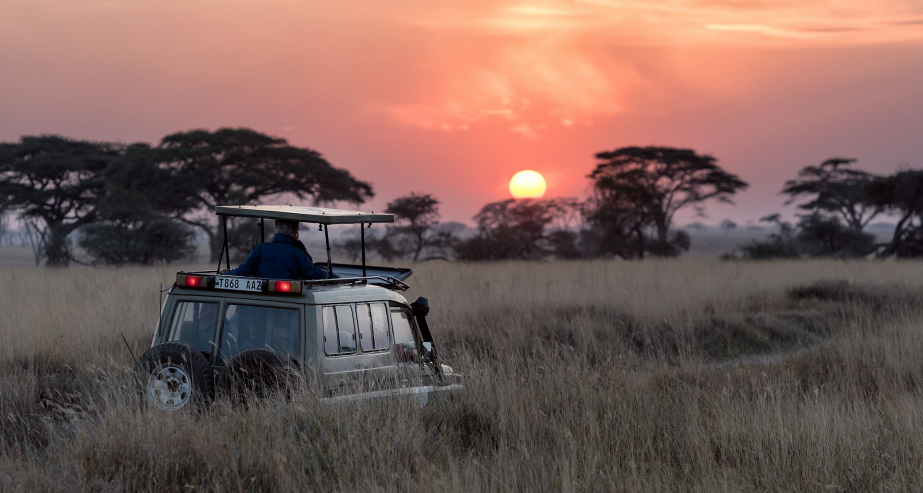
Choose a Tanzania adventure by experience, geography and season—not by trying to fit every famous place into one trip. For a first safari, the northern circuit is the simplest combination. Travelers seeking a quieter, more remote trip may prefer the southern parks. Kilimanjaro, Zanzibar and chimpanzee trekking are distinct additions that require their own time and preparation.
Which Tanzania adventure suits you?
| Priority | Strong starting point | Planning note |
|---|---|---|
| Classic first safari | Serengeti, Ngorongoro Conservation Area and Tarangire | Well-developed northern circuit; allow time for long road transfers |
| Great Migration | The part of Serengeti where herds are likely to be during your dates | Animal movement follows rain and grazing; crossings are never guaranteed |
| Remote southern safari | Nyerere or Ruaha national parks | Often reached by flight; camp seasons and road access vary |
| Mountain challenge | Mount Kilimanjaro | Use a licensed operator, allow proper acclimatization and verify insurance coverage |
| Beach and marine activities | Zanzibar, Mafia Island or the mainland coast | Choose the coast by season, diving goals and preferred atmosphere |
| Forest and primates | Gombe or Mahale Mountains | Remote logistics usually require more planning and time |
Tanzania's protected-area system includes national parks managed by Tanzania National Parks, as well as conservation areas, game reserves and marine protected areas managed under different authorities. “Best” therefore depends on the trip you want, not a universal park ranking.
Northern safari circuit
Serengeti National Park
The Serengeti is known for open plains, predators and the wider ecosystem's seasonal wildebeest migration. The UNESCO World Heritage listing describes the scale and ecological importance of this annual movement.
- Southern plains and the Ndutu area are commonly considered for the early-year calving period.
- Western and northern areas become more relevant as herds move through the ecosystem.
- River crossings depend on herd movement and local conditions; a date range is an estimate, not an appointment.
- Resident wildlife makes the park worthwhile outside a single migration event.
Read the Great Migration planning guide before choosing a camp solely from a migration map.
Ngorongoro Conservation Area
Ngorongoro is a multiple-use conservation area, not a national park. The crater floor can offer concentrated wildlife viewing, but traffic, descent times and access rules affect the visit. Combine it with nearby areas because a crater drive and a multi-day Serengeti stay provide different experiences.
Tarangire National Park
Tarangire is known for baobab landscapes and wildlife associated with the Tarangire River, especially during drier periods. It works well in a northern itinerary but should not be described as a guaranteed “elephant paradise”; sightings remain wild and variable.
Lake Manyara National Park
Lake Manyara can add forest, lake-edge habitat and birdlife to the circuit. Water levels, road access and wildlife distribution change, so ask an operator what current conditions add to your route.
Southern and western Tanzania
Nyerere National Park
Nyerere is Tanzania's largest national park, according to the Tanzania National Parks authority. The Rufiji River system makes boat-based wildlife viewing possible in permitted areas, alongside game drives and guided activities offered by individual camps.
Nyerere National Park and the remaining Selous Game Reserve are not interchangeable names for exactly the same area. When booking, confirm the actual park, gate, airstrip and activities included.
Ruaha National Park
Ruaha offers a remote landscape shaped by the Great Ruaha River. It is a strong option for travelers prioritizing time in the field over a checklist of famous northern sites. Flight schedules and seasonal camp operations can determine the practical itinerary.
Gombe and Mahale Mountains
These western parks are associated with chimpanzee trekking and Lake Tanganyika. They are not quick additions to a northern safari: access, permits, boat or flight schedules and minimum stays should be planned first.
When to go on safari
Drier months
June through October is commonly favored for many safari areas because vegetation can be less dense and animals may concentrate around water. It is also a popular period, so prices and availability can be less flexible.
Shorter rains and green season
The timing and intensity of rain vary by region and year. Greener landscapes, birding and lower visitor numbers can be advantages, while some roads or activities may be affected. January and February are often considered for the southern Serengeti ecosystem, but conditions should be checked for the actual year.
Longer rains
March through May is often wetter in many areas. Some camps close and road travel can be slower, but this is not a nationwide shutdown. Compare the exact park, camp access and cancellation terms.
See the broader Tanzania weather and season guide.
Climbing Mount Kilimanjaro
Kilimanjaro reaches 5,895 metres. It is a non-technical trekking objective on standard routes, but altitude illness can be serious and fitness does not prevent it.
- Choose a licensed operator and compare guide ratios, safety equipment and evacuation procedures.
- Prefer an itinerary that gives the body sufficient time to acclimatize; the shortest route is not automatically the best value.
- Ask how guides monitor symptoms and what triggers a descent.
- Confirm that insurance covers trekking at the maximum altitude of the route.
- Discuss personal medical risks with a qualified clinician.
Summit success can never be guaranteed. Treat any operator promising certainty as a warning sign.
Other outdoor activities
- Guided walking safaris where the park and operator permit them
- Balloon flights in selected areas, subject to weather and operating conditions
- Diving, snorkeling and seasonal marine-life trips on the coast
- Canoeing or boat activities in approved locations
- Hiking around Mount Meru, the Usambara Mountains and other designated routes
- Cultural visits arranged with informed consent and clear local benefit
Activity availability is site-specific. Verify age limits, fitness requirements, permits, environmental rules and insurance exclusions before paying.
How to evaluate a safari operator
Ask for a written itinerary that identifies the parks, number of nights, transfer method and what is included. Then check:
- The legal business identity and current operating credentials.
- The vehicle arrangement, maximum passengers and whether the guide is private or shared.
- Named accommodations or a clear standard for substitutions.
- Park fees, taxes, domestic flights, drinks and tips included or excluded.
- Cancellation, refund and itinerary-change terms.
- Emergency contacts, guide training and evacuation process.
- Animal-welfare and off-road-driving policies.
Avoid choosing solely from a headline price. Two itineraries with the same number of days may include very different time inside parks.
Entry and preparation
Visa rules depend on nationality. Some visitors are visa-exempt, some can use a standard process and some need referral approval. Check your status with the Tanzania visa requirement tool, allow up to 15 business days under this service's standard guidance, and do not submit duplicate applications.
Also confirm your arrival point, travel insurance and current health advice. The first-time visitor guide covers packing, money and practical preparation.
Frequently asked questions
Can I see the Big Five in Tanzania?
All five species occur in Tanzania, but no itinerary guarantees every sighting. The right park combination, enough time and a skilled guide improve the opportunity without controlling wildlife.
Is the dry season always best?
No. Drier months often make wildlife viewing easier, but can be busier and more expensive. Green-season travel may suit photographers, birders and travelers comfortable with variable rain.
Can I combine safari, Kilimanjaro and Zanzibar in one week?
That route is too compressed for most travelers. Each flight or road transfer consumes time, and a Kilimanjaro climb alone usually requires multiple days plus recovery. Prioritize one main experience or extend the trip.
Do all travelers need a Tanzania eVisa?
No. Eligibility depends on nationality and other circumstances. Use the nationality checker rather than assuming that “most travelers” follows one rule.
Content reviewed: 10 August 2026. Park access, activities and migration conditions can change; confirm the details of the exact route before booking.